
Understanding PVC Applications: Key Uses in Modern Manufacturing
Introduction
Polyvinyl Chloride (PVC) is one of those materials you probably encounter every day, whether you realize it or not. It’s super versatile and durable, making it a go-to choice in modern manufacturing. Think about it: from construction materials like pipes and windows to essential healthcare products such as IV bags and tubing, PVC is everywhere! But here’s the thing - as industries change and the push for sustainable practices grows, you might be wondering: can PVC keep its spot in the spotlight despite environmental concerns and new alternatives popping up?
In this article, we’ll dive into why PVC matters in today’s manufacturing world. We’ll explore its wide range of applications, its standout properties, and the challenges it faces moving forward. So, let’s get started!
Define PVC: Composition and Significance in Manufacturing
Polyvinyl Chloride (PVC) is a synthetic polymer made from vinyl chloride monomers. It’s one of the most popular plastics out there, and for good reason! The versatility, durability, and applications are well-recognized in various industries. You’ll find it in two main forms: rigid and flexible. PVC is a go-to in construction for things like pipes, doors, and windows. On the flip side, it is used in areas like electrical cable insulation and automotive parts.
Now, why is PVC so important in manufacturing? Well, it’s all about adaptability. In construction, for example, PVC products constitute over 60% of global consumption. It’s a reliable choice for infrastructure projects, including water distribution and sewage systems. Plus, its resistance to weather, corrosion, and chemicals makes it ideal for outdoor applications, requiring minimal maintenance. Sounds pretty ideal, right?
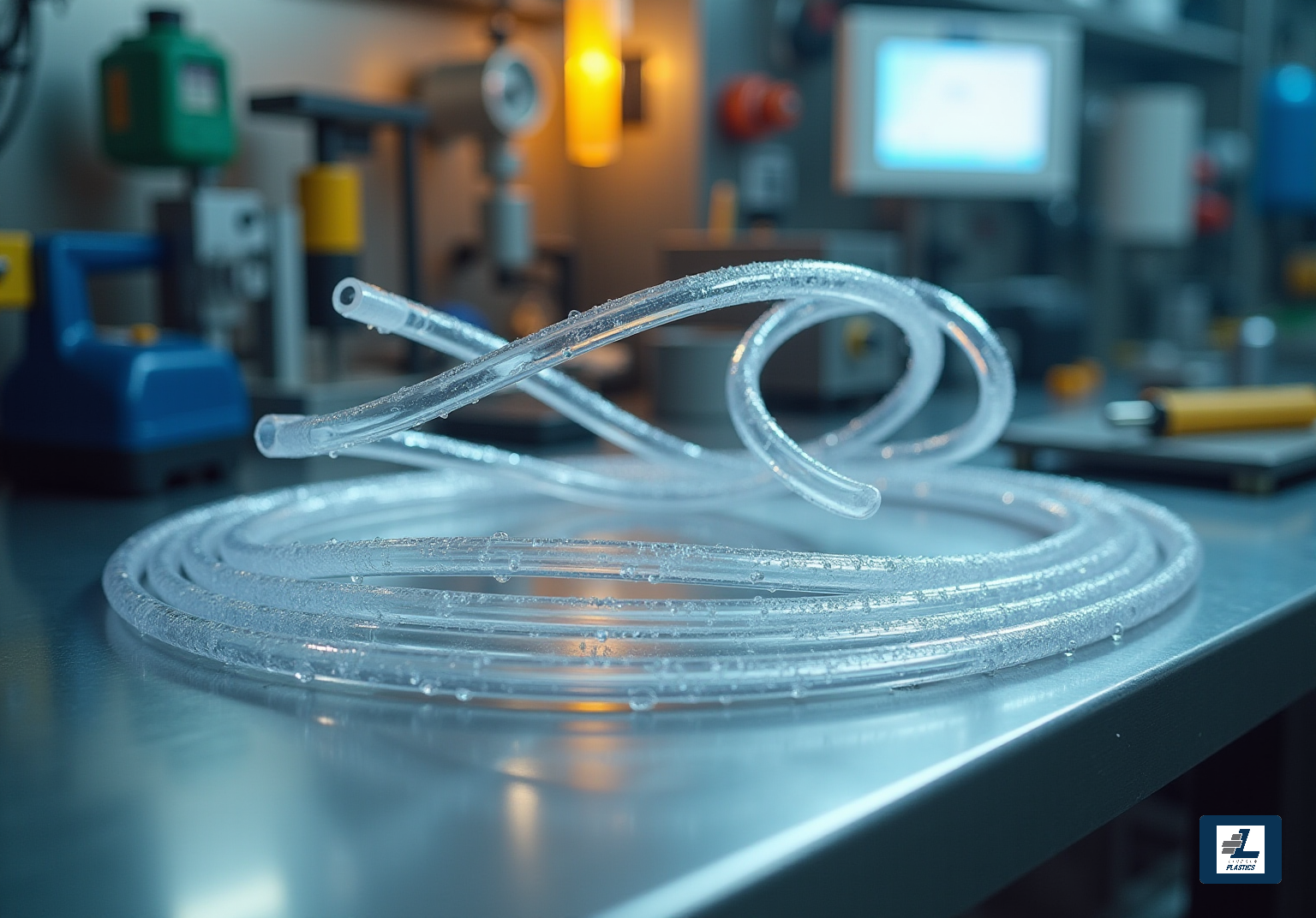
In healthcare, the use of PVC materials is absolutely essential. It’s used to make IV bags, tubing, and other medical devices, and it’s valued for its clarity and biocompatibility. The consistency and safety of PVC are crucial for ensuring that patient care standards are always met in single-use medical applications.
You might be curious about the market trends. Recent developments show that it’s entering a stabilization phase, with no new capacity plans expected for 2026 after a big expansion cycle in China. This shift could improve supply dynamics, possibly leading to better pricing and profitability. As industries continue to innovate, PVC will remain a key material, adapting to the ever-changing needs of modern production.
Speaking of innovation, Lincoln Plastics is all about creating tailored solutions in various sizes and materials. They even have the capability to co-extrude colors into profiles, ensuring top-notch quality and timely delivery. Their expertise also includes flexible cord covers and cable management solutions, designed to protect businesses and boost operational efficiency. According to Harry Thomas, Director at S&P Global, 'we do expect a larger annual export PVC volume, primarily driven by India's growth and PVC imports into India from China, Taiwan, Japan, South Korea, and the USA.' So, what do you think? It's a sector to keep an eye on!

Trace the History of PVC: Evolution and Technological Advancements
PVC, or polyvinyl chloride, has quite the history! It was first identified back in 1835 by French chemist Henri Victor Regnault. But it wasn’t until 1872 that German chemist Eugen Baumann really got it going by synthesizing it into a more practical form. Fast forward to the 1920s, and the development of PVC began to gain traction when American scientist Waldo Semon found a way to make it more flexible and broadening its uses. After World War II, production of PVC really took off, thanks to its cost-effectiveness and versatility. By the 1950s, it was everywhere, with thousands of American homes using PVC in plumbing systems during the 1980s because of its durability and resistance to corrosion.
At Lincoln Plastics, we totally get how important quality assurance and customization are when it comes to making products. Our partnerships with OEMs mean we meet their specifications with precision, using various check gauges to ensure everything fits just right. The late 20th century brought technological advancements, and we’re committed to leveraging those innovations to enhance temperature resistance and optimize properties for specific applications.
Now, let’s talk about the automotive sector. There’s been a growing demand for PVC products, and it’s easy to see why! Its strength and chemical resistivity make it perfect for interior trims and panels. In fact, this demand is projected to grow at a compound annual growth rate of 3.7% through 2030. Our quality system is robust, featuring a dedicated quality book for each plastic profile, ensuring that all critical dimensions are spot on throughout the manufacturing process.
We also offer customization services, like sourcing colors that match your Pantone specifications for consistency across manufacturers. Recent case studies really highlight the impact of these advancements. For example, a leading European medical supplies brand optimized its production lines to meet a surge in demand, showing just how crucial tailored solutions are for production efficiency. This optimization led to high performance and earned significant praise from the client.
Looking at the bigger picture, the PVC market is expected to reach USD 95.88 billion by 2030, reflecting a CAGR of 4.2% from 2023 to 2030. This growth is largely driven by the versatility of PVC products and their lower dependency on petroleum feedstock compared to other plastics, solidifying their essential role in construction, healthcare, and consumer goods. However, we can’t ignore the environmental concerns surrounding chlorine content in PVC and the hazardous byproducts released during production. As consumers and manufacturers increasingly seek greener alternatives, these challenges could impact market growth.

Explore PVC Applications: Diverse Uses in Modern Industries
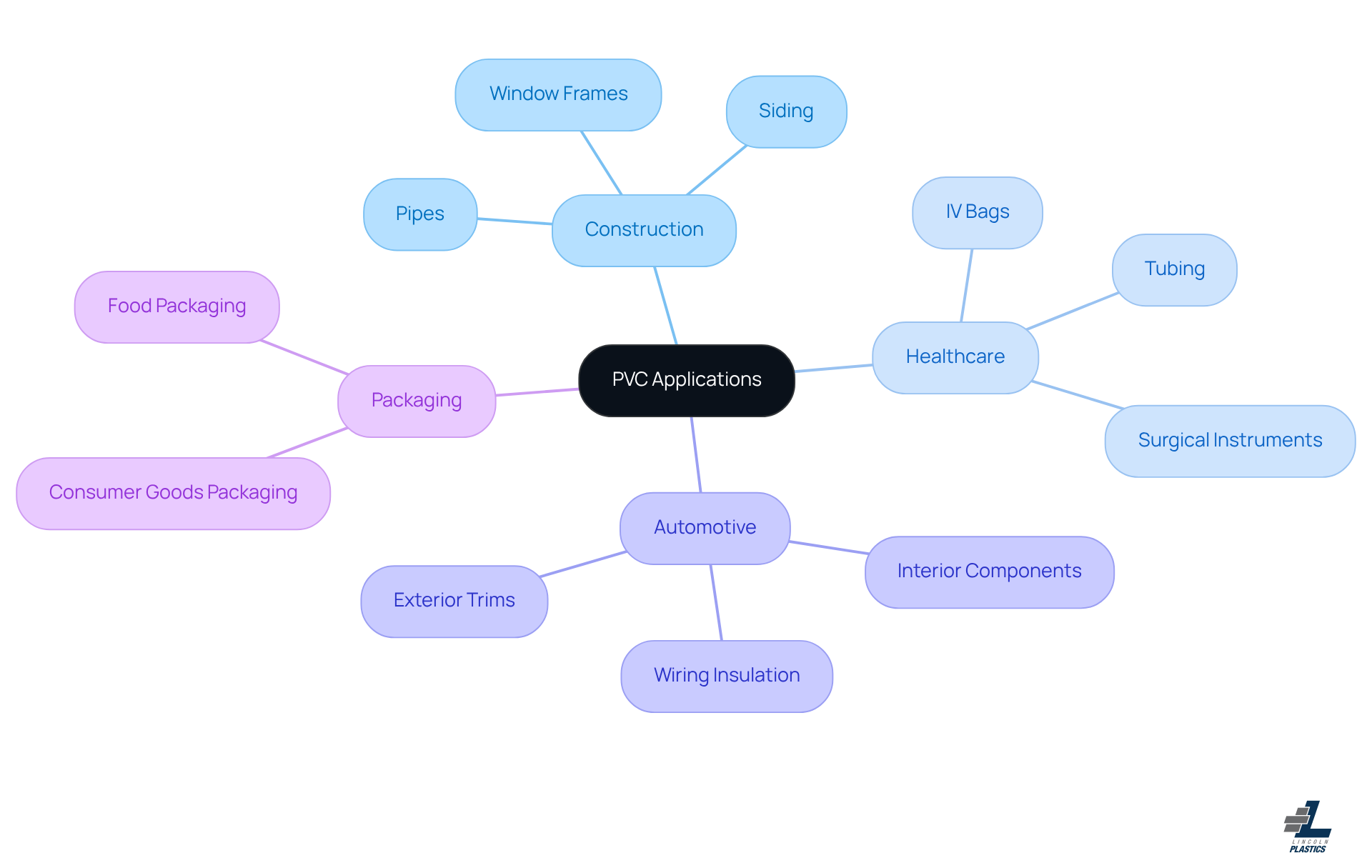
PVC is a pretty versatile material, right? You can see it emerging in all sorts of industries. In construction, for instance, PVC products are commonly used for pipes, siding, and window frames. Why? Well, it’s durable and doesn’t corrode easily, which is a big plus.
Now, let’s talk about healthcare. This sector heavily depends on PVC materials, particularly plasticizers, for essential products like IV bags, tubing, and surgical instruments. It’s all about biocompatibility and clarity here. Did you know that the healthcare segment is growing at a solid rate of 6.8% each year? That’s driven by the rising demands in healthcare.
Moving on to the automotive industry, we can see that PVC shines again! It’s used for interior components, wiring insulation, and even exterior trims. Its lightweight and flexible nature makes it a favorite. Lately, there’s been a trend towards additives that boost flame retardancy and thermal stability, especially for wires and cables.
And let’s not forget the importance of packaging in retail! PVC plays a significant role here too, providing a cost-effective solution for food and consumer goods, thanks to its excellent barrier properties.
As industries evolve, there’s a lot of research focused on PVC formulations and innovative applications. For example, the North American PVC compound market is expected to jump from $3.46 billion in 2024 to $4.89 billion by 2032. That’s a compound annual growth rate of 5.2%! This growth is fueled by technological advancements and strict performance standards, particularly in construction. The versatility of PVC keeps sparking innovation, ensuring it remains relevant in today’s production landscape.
At Lincoln Plastics, we’re all about enhancing safety and efficiency with our products and tailored extrusion profiles. We use materials like polyethylene and ridged PVC to get the job done. Our commitment to quality and customization means we work closely with clients, ensuring precision and compliance in every application. Plus, our strong production capabilities and strict adherence to tolerances really set us apart as leaders in the industry.
Examine PVC Properties: Key Characteristics for Manufacturing Success
The impressive properties of PVC make it a go-to choice for various applications in manufacturing. For starters, it’s highly resistant to chemicals, moisture, and UV light, which means it’s perfect for outdoor use and durability. Plus, PVC boasts excellent mechanical strength, so it can handle a lot of stress without losing its shape. And let’s not forget its lightweight nature, which cuts down on transportation costs and makes installation a breeze.
Now, let’s talk about how easy it is to work with PVC. It can be processed in various ways, like extrusion and injection molding, allowing manufacturers to create all sorts of complex shapes and designs. And with the ability to add different additives, PVC can be customized for specific applications.
At Lincoln Plastics, we really value our partnerships with OEMs. We work closely with them to ensure our PVC products meet all industry standards, including those special checks for ‘fit and function’. Our quality system is robust, featuring a dedicated quality book for each plastic profile. This includes drawings, critical in-process checks, and run documentation, ensuring precision in every production aspect.
In the healthcare sector, PVC is used in medical devices. It’s a versatile material that plays a crucial role in patient care. The demand for PVC is strong in industries such as construction and automotive, with the market segment growing at a CAGR of 5.77%. This growth is all about the increasing applications of PVC, solidifying its place as a cornerstone in modern manufacturing.
Looking ahead, market dynamics suggest potential inventory growth from 2026 to 2028, which could impact future demand and supply trends. As the industry evolves, it’s essential for OEM Purchasing Managers to stay informed about these elements while navigating the PVC market.

Conclusion
Polyvinyl Chloride (PVC) is a key player in modern manufacturing, and it’s easy to see why! This material is not just versatile; it’s robust, making it a favorite across various industries. Whether it’s in construction, healthcare, automotive, or packaging, PVC proves its adaptability and relevance in today’s production landscape. Plus, it meets diverse needs while being durable and cost-effective.
Now, let’s take a moment to reflect on some key insights. The journey of PVC is fascinating, from its discovery to becoming a staple in many products. Thanks to technological advancements, its properties and applications have only improved over time. We also can’t overlook the critical roles PVC plays in essential products like medical devices and construction materials. It’s all about ensuring safety and efficiency in various sectors. And guess what? The future looks bright for the PVC market, driven by ongoing innovations and its unique characteristics.
As industries evolve, focusing on sustainable practices and innovative PVC applications is more important than ever. Embracing PVC not only boosts manufacturing efficiency but also supports environmental responsibility. So, what can you do? Stay informed about the latest developments in PVC technology and market dynamics. By doing so, you can help shape a sustainable future for manufacturing!
Frequently Asked Questions
What is PVC and how is it made?
PVC, or Polyvinyl Chloride, is a synthetic polymer made from vinyl chloride monomers.
What are the two main forms of PVC and their applications?
The two main forms of PVC are rigid and flexible. Rigid PVC is commonly used in construction for pipes, doors, and windows, while flexible PVC is used in electrical cable insulation and medical devices.
Why is PVC significant in manufacturing?
PVC is significant due to its adaptability, durability, and cost-effectiveness. It constitutes over 60% of global consumption in construction, making it a reliable choice for infrastructure projects that require minimal maintenance.
How is PVC used in healthcare?
In healthcare, PVC is essential for making IV bags, tubing, and other medical devices. It is valued for its clarity and biocompatibility, which are crucial for ensuring patient care standards in single-use applications.
What is the current state of the PVC market?
The PVC market is entering a stabilization phase, with no new capacity plans expected for 2026 after a significant expansion cycle in China. This shift may improve supply-demand dynamics, potentially leading to better pricing and profitability.
What innovations are companies like Lincoln Plastics pursuing in PVC applications?
Lincoln Plastics is focused on creating tailored flexible profiles in various sizes and materials, with capabilities to co-extrude colors into profiles. They also specialize in flexible cord covers and cable management solutions to enhance operational efficiency.
What is expected for PVC exports in the future?
According to Harry Thomas from S&P Global, a larger annual export volume of PVC is expected, primarily driven by growth in India and PVC imports into India from countries like China, Taiwan, Japan, South Korea, and the USA.
List of Sources
- Define PVC: Composition and Significance in Manufacturing
- News - PVC Industry’s Expansion Cycle Ends, 2026 Supply-Demand to Improve Marginally (https://chemdo.com/news/pvc-industrys-expansion-cycle-ends-2026-supply-demand-to-improve-marginally)
- US PVC Prices Rise in Early January 2026 on Supply Cut Expectations | ChemAnalyst (https://chemanalyst.com/NewsAndDeals/NewsDetails/us-pvc-prices-rise-in-early-january-2026-on-supply-cut-40680)
- COMMODITIES 2026: Global 2026 PVC on the edge of production cuts and trade flow twists (https://spglobal.com/energy/en/news-research/latest-news/chemicals/122325-commodities-2026-global-2026-pvc-on-the-edge-of-production-cuts-and-trade-flow-twists)
- prm-taiwan.com (https://prm-taiwan.com/blog/case-studies-in-pvc-medical-tube-production-realworld-examples-success_518)
- Applications of PVC: Versatile Utility Across Modern Industries (https://chemanalyst.com/NewsAndDeals/NewsDetails/applications-of-pvc-versatile-utility-across-modern-industries-37716)
- Trace the History of PVC: Evolution and Technological Advancements
- prm-taiwan.com (https://prm-taiwan.com/blog/case-studies-in-pvc-medical-tube-production-realworld-examples-success_518)
- fortunebusinessinsights.com (https://fortunebusinessinsights.com/polyvinyl-chloride-pvc-market-109398)
- A Brief History of PVC - Piper Plastics Corp. (https://piper-plastics.com/2017/03/27/a-brief-history-of-pvc)
- Polyvinyl Chloride Market Size And Share Report, 2024-2030 (https://grandviewresearch.com/industry-analysis/polyvinyl-chloride-pvc-market)
- Explore PVC Applications: Diverse Uses in Modern Industries
- global.noharm.org (https://global.noharm.org/focus/plastics/case_studies)
- intelmarketresearch.com (https://intelmarketresearch.com/pvc-compound-market-21893)
- argusmedia.com (https://argusmedia.com/en/news-and-insights/latest-market-news/2748322-westlake-sees-rebounding-pvc-demand-in-2026)
- prm-taiwan.com (https://prm-taiwan.com/blog/case-studies-in-pvc-medical-tube-production-realworld-examples-success_518)
- Examine PVC Properties: Key Characteristics for Manufacturing Success
- News - PVC Industry’s Expansion Cycle Ends, 2026 Supply-Demand to Improve Marginally (https://chemdo.com/news/pvc-industrys-expansion-cycle-ends-2026-supply-demand-to-improve-marginally)
- Scientists develop novel method for strengthening PVC products (https://news.osu.edu/scientists-develop-novel-method-for-strengthening-pvc-products)
- Applications of PVC: Versatile Utility Across Modern Industries (https://chemanalyst.com/NewsAndDeals/NewsDetails/applications-of-pvc-versatile-utility-across-modern-industries-37716)
- COMMODITIES 2026: Global 2026 PVC on the edge of production cuts and trade flow twists (https://spglobal.com/energy/en/news-research/latest-news/chemicals/122325-commodities-2026-global-2026-pvc-on-the-edge-of-production-cuts-and-trade-flow-twists)
Related posts

Why Custom Pipe Extrusion Matters More Than Ever
Standard pipe sizes don’t always work. Learn how Lincoln Plastics delivers custom diameters, wall thicknesses, and finishes in right-sized runs.


Reducing Trip Hazards with Custom Cord Management
Loose cords are more than messy — they’re a safety hazard. Lincoln Plastics’ custom cord covers and Flexiduct solutions improve safety and efficiency.
The Power of Custom Plastic Profiles for OEMs
Off-the-shelf profiles force compromises. Learn how Lincoln Plastics designs custom extruded profiles for OEMs with exact specs and right-sized runs.
