

Understanding Compressive Strength of PVC for Better Procurement Decisions
Introduction
Understanding the compressive strength of PVC is super important for industries that rely on this versatile material, especially when durability and reliability are key. As procurement pros tackle the tricky world of material selection, it’s essential to recognize how things like wall thickness, density, and temperature can impact compressive strength. This knowledge can really help in making better decisions and boosting product performance.
But here’s the thing: the stakes are high. Choosing the wrong specifications can lead to some serious failures. So, how can stakeholders make sure they’re picking the right specs to keep things safe and efficient? Let’s dive into this together!
Define Compressive Strength and Its Importance in PVC Applications
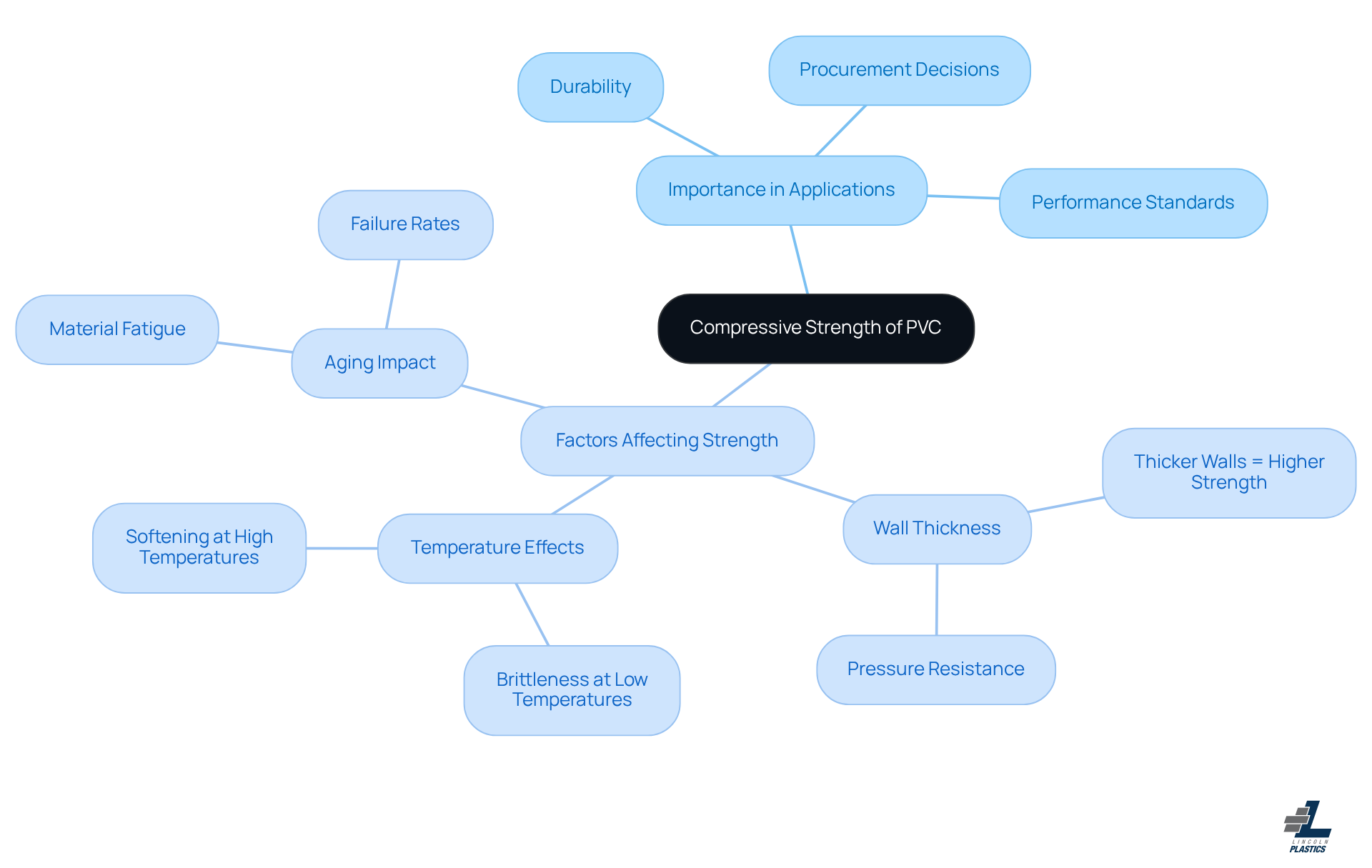
Compressive capacity is all about how well a material can handle those axial loads that squeeze it down. This is super important for the Polyvinyl Chloride, particularly regarding applications such as piping and construction. You see, this property plays a big role in product performance because it directly affects the products and their durability and reliability in real-world situations. For example, the design and selection of PVC pipes rely heavily on the compressive strength, as they need to bear the weight of soil and other external pressures.
Now, let’s talk about something interesting: recent studies show that newer PVC formulations have a much better compressive strength. This means they can handle greater internal and external pressures. In applications such as municipal sewage systems, it is crucial to choose options with a high compressive strength or reinforced PVC for safety and longevity. Did you know that compressive strength is responsible for 31% of failures? With an average lifespan of just 15 years, it really highlights how important it is to choose the right specifications to boost performance.
But wait, there’s more! We can’t overlook how temperature affects PVC. PVC can get pretty fragile in low temps and become all pliable when it’s hot, which can impact its reliability. Understanding these dynamics is key to ensuring that the material selection aligns with the performance standards needed for their intended applications. By focusing on structural integrity in procurement choices, companies can really enhance the durability and safety of their projects.
Explore PVC Material Properties Affecting Compressive Strength
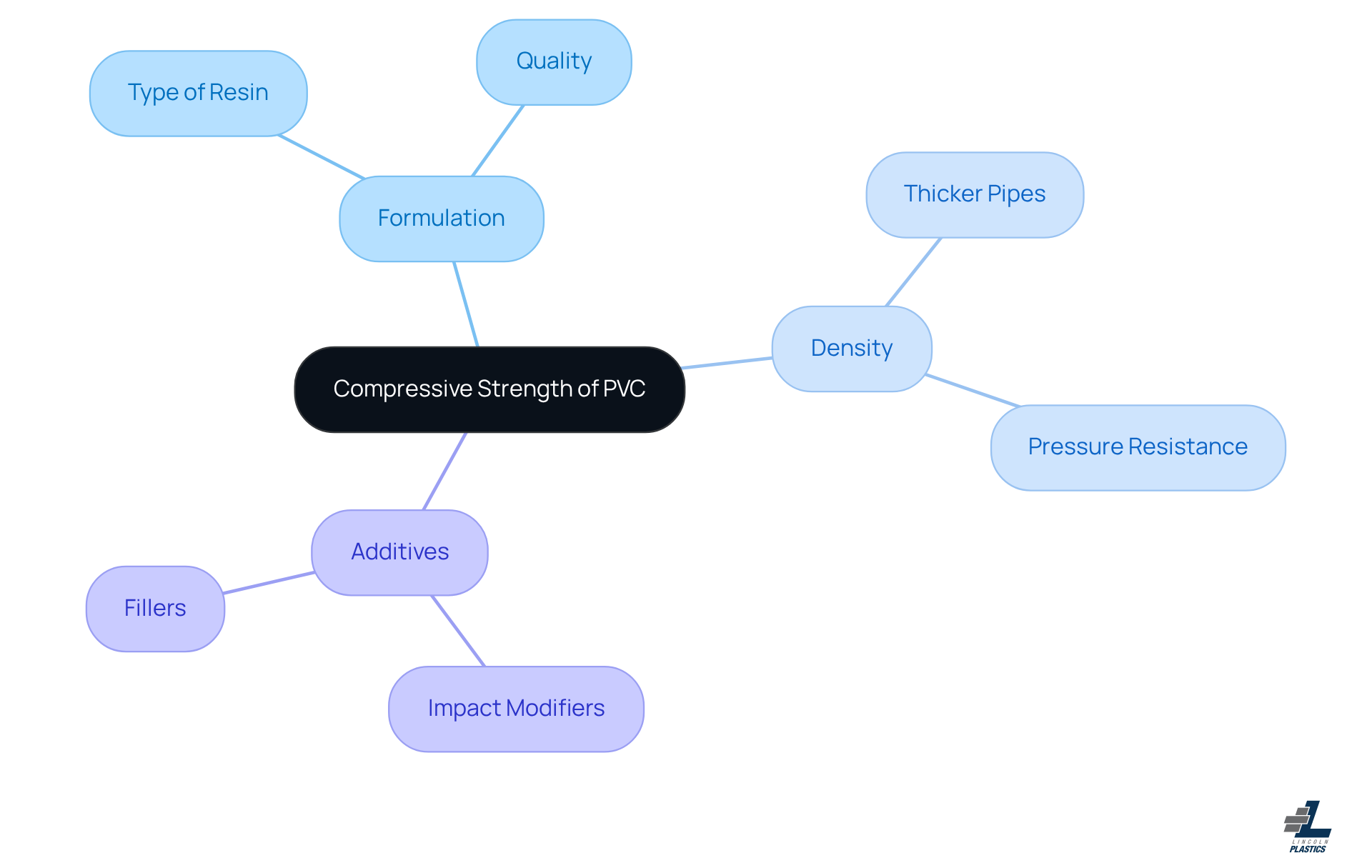
When it comes to PVC, several factors can really impact the compressive strength. Think about it: the formulation, density, and even the additives all play a role. For example, the type of resin used in making PVC can make a big difference in how durable it is. Generally, stronger formulations lead to stronger products.
Now, let’s talk about density. A denser PVC typically exhibits a better compressive strength, leading to improved performance. So, if you’re looking at different grades, you’ll find they can handle more pressure. That’s because the density of the material is key when it comes to assessing how well the material can withstand force.
And don’t forget about additives! Things like impact modifiers can significantly enhance the properties of PVC, making the material tougher and better at resisting deformation under load. Plus, did you know that additives can improve sound insulation by up to 40%? That’s super important in situations where sound insulation matters.
Understanding these properties is crucial for manufacturers and procurement professionals. It helps them make informed decisions for their specific needs. So, next time you’re in the market for PVC, keep these factors in mind!
Outline Testing Methods for Evaluating PVC Compressive Strength
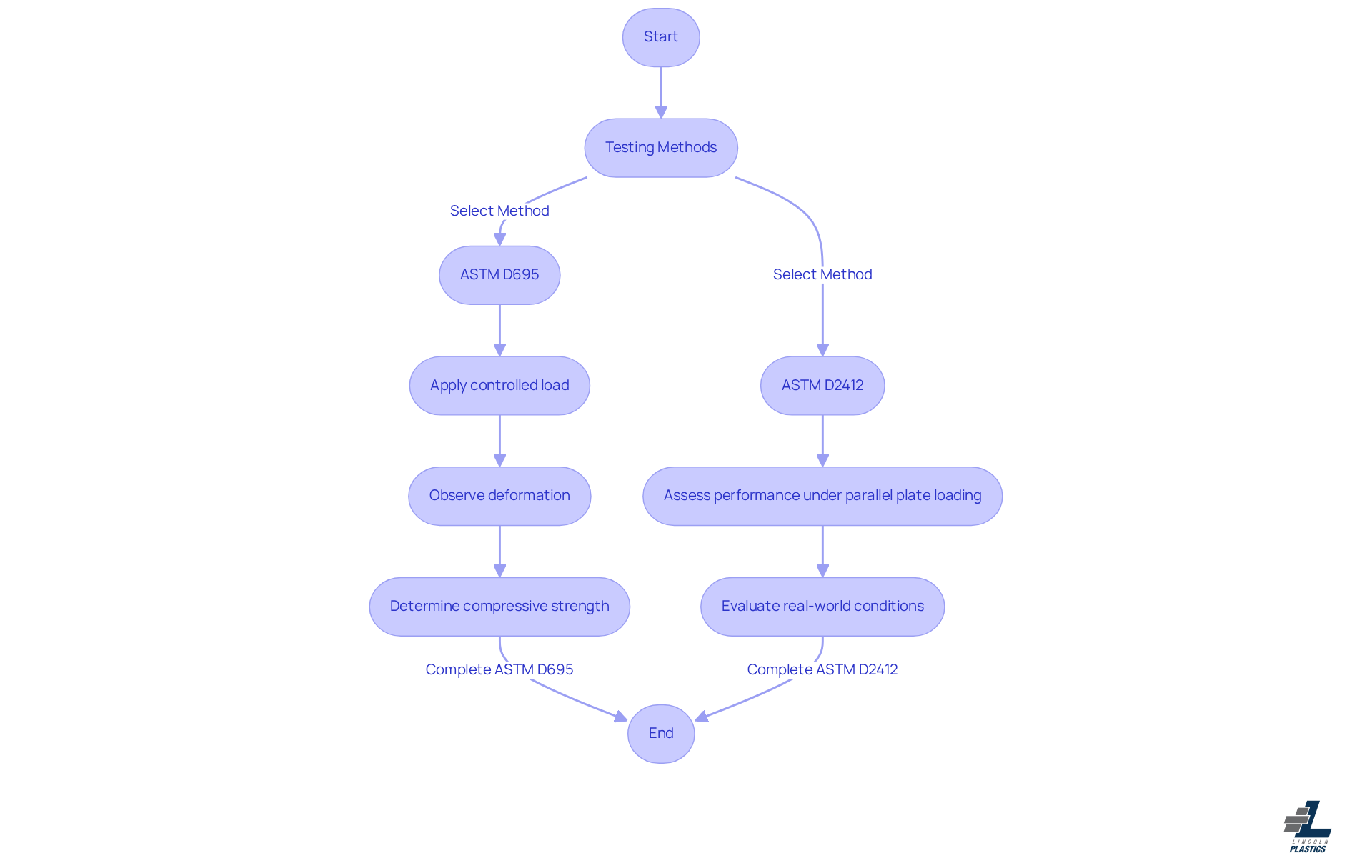
When it comes to PVC, understanding the compressive strength is essential for ensuring that products are reliable and meet industry standards. One of the go-to methods for this is the compressive strength test. This test looks at the strength characteristics of PVC materials. Basically, you apply a controlled load to a PVC sample until it deforms, which helps you determine the compressive strength and its modulus. And guess what? Recent advancements in testing have made this method even more accurate and efficient, leading to better material characterization. For instance, adding fillers like calcium carbonate has shown to significantly boost the compressive strength.
Now, let’s talk about another key method: the flexural strength test. This one assesses how plastic pipes, especially PVC ones, perform under parallel plate loading concerning the compressive strength. It’s really relevant because it gives us insights into how these pipes hold up in real-world conditions. Did you know that around 720,000 homes are currently replacing PB pipes? That really highlights how crucial it is to have reliable PVC products in the market.
Manufacturers should definitely make these tests a regular part of their quality assurance processes. By sticking to these testing protocols, they can ensure their PVC products not only meet but actually exceed industry specifications. This ultimately helps OEMs and other stakeholders make informed decisions. So, let’s keep pushing for quality and reliability in PVC products!
Analyze the Impact of Compressive Strength on PVC Product Design
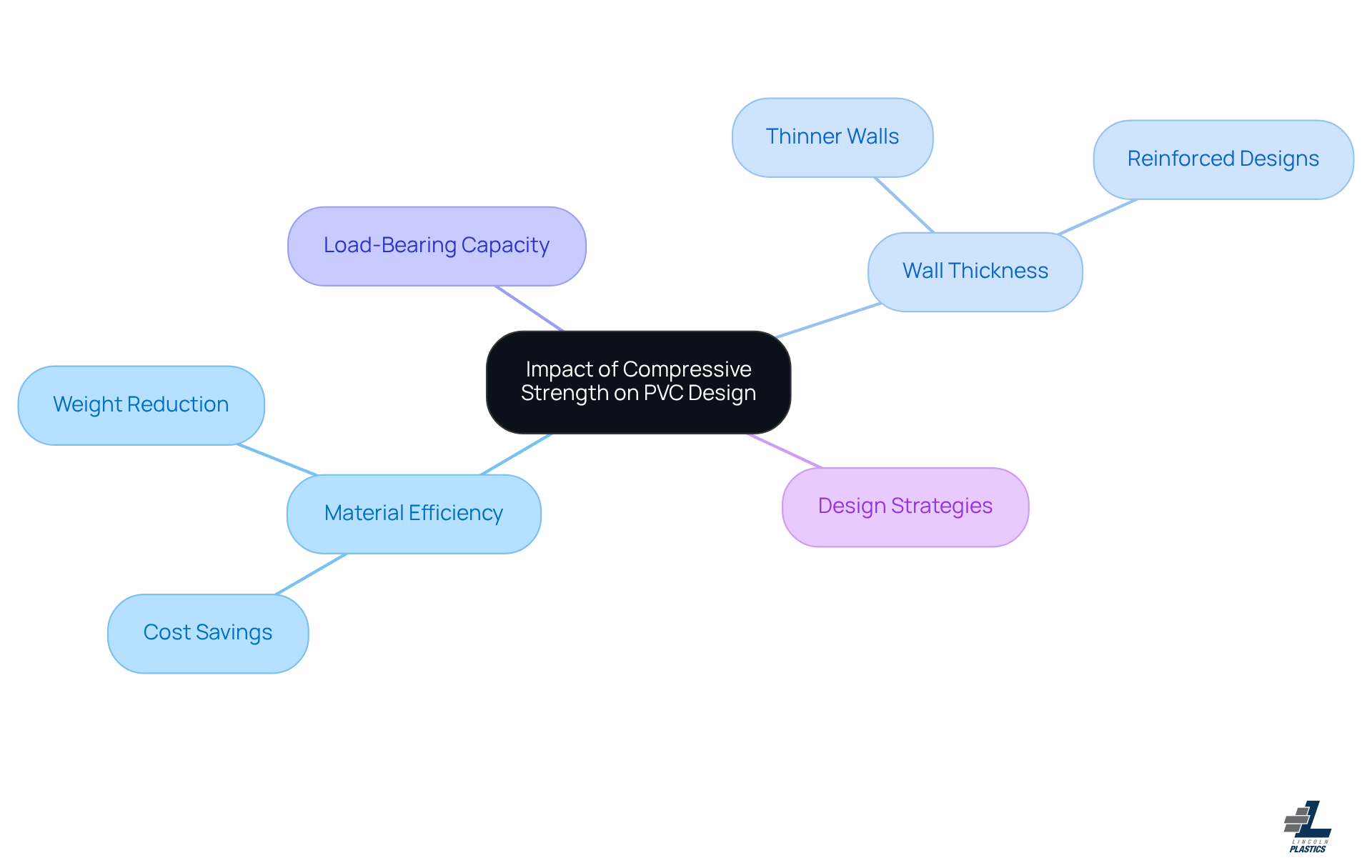
You know, the compressive strength is super important when designing PVC products for various uses, especially in applications at Lincoln Plastics. When we enhance pressure resistance, we can actually use thinner walls without sacrificing structural integrity. This means we save on materials and create lighter products, which is a big win in many applications. For example, pipes made for high-pressure environments can still perform well even with reduced wall thickness, helping to improve efficiency.
Now, let’s talk about situations where you need additional strength, like in construction. In these cases, thicker walls or reinforced designs might be necessary to ensure safety and durability. The impact of compressive strength is significant; as durability increases, producers can strategically reduce wall thickness while still meeting performance standards.
At Lincoln Plastics, we totally get that the relationship between wall thickness and the compressive strength is key for product design. Our expertise in material science allows us to offer tailored solutions that fit specific load requirements, ensuring safety and durability without wasting materials. Plus, our inventory management helps us keep optimal inventory levels, adjusting for busy and slower seasons, which boosts our operational efficiency. Efficient designs that make the most of compressive strength data not only improve product performance but also enhance overall operational efficiency, empowering procurement professionals to make informed decisions.
Conclusion
Understanding the compressive strength of PVC is super important when it comes to making smart purchasing decisions. It’s all about ensuring that the products you choose are durable and reliable for various applications. This strength not only tells us how well PVC can handle external pressures but also affects how well PVC products perform, especially in critical areas like piping and structural components. By focusing on compressive strength, you can really boost the safety and efficiency of your projects.
Now, let’s talk about some key insights we’ve covered. We’ve looked at the importance of:
- Wall thickness
- How material properties like density and additives play a role
- The impact of temperature on PVC performance
Plus, we highlighted standardized testing methods like:
- ASTM D695
- ASTM D2412
These methods help ensure that manufacturers deliver reliable products that meet industry standards.
Ultimately, we can’t stress enough how crucial compressive strength is in PVC procurement and design. As the industry keeps evolving, staying updated on current trends and best practices will empower you to make better material choices, optimize product performance, and enhance operational efficiency. By weaving a solid understanding of compressive strength into your procurement strategies, you can not only meet but exceed safety and reliability expectations in your PVC applications.
Frequently Asked Questions
What is compressive strength in the context of PVC applications?
Compressive strength refers to how well PVC (Polyvinyl Chloride) can withstand axial loads that compress it. This property is crucial for applications like piping and structural components, as it affects the durability and reliability of PVC products.
Why is compressive strength important for PVC products?
Compressive strength is important because it directly influences the ability of PVC products, such as pipes, to bear external pressures like soil weight. It plays a significant role in procurement decisions and ensures the products perform well in real-world situations.
How does the thickness of PVC pipes affect their compressive strength?
Thicker-walled PVC pipes have a much better compressive strength, allowing them to handle greater internal and external pressures, which is particularly important in high-pressure environments like municipal sewage systems.
What are the implications of substance aging on PVC performance?
Substance aging is responsible for 31% of failures in PVC products, highlighting the importance of selecting the right specifications to enhance performance. The average lifespan of PVC is around 15 years.
How do temperature changes affect the compressive strength of PVC?
PVC can become fragile in low temperatures and pliable in high temperatures, which can impact its reliability. Understanding these effects is essential for ensuring that PVC products meet the necessary performance standards for their applications.
What should companies focus on in their procurement choices regarding PVC?
Companies should focus on structural integrity in their procurement choices to enhance the operational efficiency and safety of their projects, ensuring that the compressive strength of PVC products aligns with their intended applications.
List of Sources
- Define Compressive Strength and Its Importance in PVC Applications
- phpipefitting.com (https://phpipefitting.com/news/shownews.php?lang=en&id=213)
- phtopindustry.com (https://phtopindustry.com/how-strong-are-pvc-pipes)
- PVC compounds, properties and applications | Benvic Group (https://benvic.com/news-and-stories/PVC-compounds---properties-and-applications)
- Scientists develop novel method for strengthening PVC products (https://news.osu.edu/scientists-develop-novel-method-for-strengthening-pvc-products)
- Explore PVC Material Properties Affecting Compressive Strength
- phpipefitting.com (https://phpipefitting.com/news/shownews.php?lang=en&id=213)
- PVC compounds, properties and applications | Benvic Group (https://benvic.com/news-and-stories/PVC-compounds---properties-and-applications)
- chinaruicheng.com (https://chinaruicheng.com/news/how-to-improve-the-pressure-resistance-of-pvc-injection-molded-fittings)
- Scientists develop novel method for strengthening PVC products (https://news.osu.edu/scientists-develop-novel-method-for-strengthening-pvc-products)
- Outline Testing Methods for Evaluating PVC Compressive Strength
- phpipefitting.com (https://phpipefitting.com/news/shownews.php?lang=en&id=213)
- PVC compounds, properties and applications | Benvic Group (https://benvic.com/news-and-stories/PVC-compounds---properties-and-applications)
- polypipenews.com.au (https://polypipenews.com.au/news/pvc-phthalates-reacting-in-chlorinated-water)
- iextrusion.com (https://iextrusion.com/reliability-analysis-of-pvc-pipe-extrusions-in-high-pressure-pipelines)
- repolyfine.com (https://repolyfine.com/news/can-new-pvc-foaming-regulator-technology-resha-85001082.html)
- Analyze the Impact of Compressive Strength on PVC Product Design
- pmc.ncbi.nlm.nih.gov (https://pmc.ncbi.nlm.nih.gov/articles/PMC10490237)
- sciencedirect.com (https://sciencedirect.com/science/article/abs/pii/S2214785321052913)
- degruyterbrill.com (https://degruyterbrill.com/document/doi/10.1515/eng-2022-0404/html?lang=en&srsltid=AfmBOoq-3dG6zWsJJlm-9SXxbdDDPNTOINX_HyiUaTYl3vGbLn59ug8O)
- mdpi.com (https://mdpi.com/2075-5309/14/6/1884)
Related posts

Why Custom Pipe Extrusion Matters More Than Ever
Standard pipe sizes don’t always work. Learn how Lincoln Plastics delivers custom diameters, wall thicknesses, and finishes in right-sized runs.


Reducing Trip Hazards with Custom Cord Management
Loose cords are more than messy — they’re a safety hazard. Lincoln Plastics’ custom cord covers and Flexiduct solutions improve safety and efficiency.
The Power of Custom Plastic Profiles for OEMs
Off-the-shelf profiles force compromises. Learn how Lincoln Plastics designs custom extruded profiles for OEMs with exact specs and right-sized runs.
