
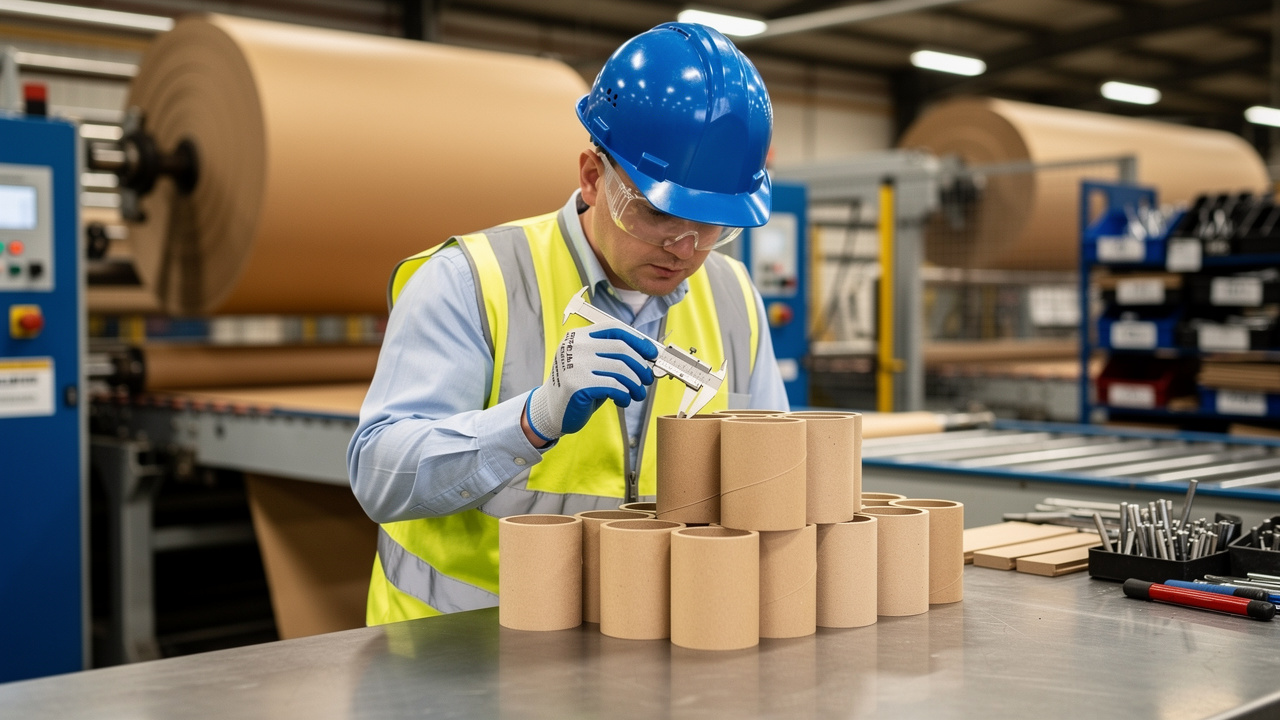
Best Practices for Optimizing Tube Cores in Manufacturing
Introduction
In the competitive world of manufacturing, the optimization of tube cores stands as a pivotal factor in driving efficiency and product excellence. By implementing best practices in material selection, production techniques, and supplier relationships, manufacturers can significantly improve their processes and outcomes.
However, manufacturers often struggle to balance material properties with application-specific requirements. How can they ensure they are making the right choices to meet both performance standards and market demands?
This article delves into effective strategies for optimizing tube cores, highlighting the importance of tailored solutions and robust quality management. By embracing these practices, manufacturers can not only meet but exceed market demands.
Differentiate Between Paper Tubes and Cores
In the manufacturing sector, understanding the distinct roles of paper cylinders and centers is essential for optimizing production efficiency. Paper cylinders are generally utilized to safeguard items during transportation or storage, while centers are intended to support materials that are wrapped around them, such as textiles or films.
Are you unsure about which product best suits your manufacturing needs? Understanding these differences can guide manufacturers in selecting the appropriate product for their specific applications. For example:
- A producer of packaging materials may choose paper cylinders.
- A textile producer would need supports that can endure the tension of winding.
Choosing the wrong product can result in costly delays and subpar performance. By making informed choices, manufacturers can enhance their processes and ensure their products meet the highest standards of quality and performance.

Select High-Quality Materials for Tube Cores
In the realm of tube cores production, selecting the right materials can determine your project’s success. Here are essential best practices to consider:
- Choose high-quality materials such as heavy-duty cardboard or specialized composites to enhance the strength and durability of the tube cores. For instance, using tube cores made of kraft paper with high tensile strength is effective in preventing deformation during winding processes.
- Prioritize Sustainability: As environmental concerns grow, consider using recycled or sustainably sourced materials. This not only satisfies regulatory requirements but also attracts eco-conscious consumers.
- Collaborate with Suppliers: Work closely with suppliers to guarantee that the materials used comply with industry standards and are suitable for the intended application.
- Implement Regular Testing: Conduct regular testing and standards checks during the production process to ensure that materials maintain their integrity throughout the manufacturing cycle.
At Lincoln Plastics, we prioritize robust management plans, complete with specialized manuals and thorough inspections, to guarantee our cylinder structures meet the highest standards of excellence. Our ISO 9001:2015 certification reflects our commitment to quality and customer partnership, ensuring that we deliver optimal solutions tailored to the needs of OEMs. Neglecting these best practices could compromise the integrity of your product and its competitiveness in the market, particularly in relation to tube cores.

Implement Tailored Solutions for Specific Applications
To thrive in the production of tube cores, customized solutions are essential, not just beneficial. For instance, a producer creating centers for heavy-duty applications may require structures with reinforced designs to endure greater loads. On the other hand, tube cores used for lighter applications might prioritize flexibility and ease of handling. By assessing the unique requirements of each application, manufacturers can adjust their production techniques. This might include altering the winding process or selecting different adhesives to enhance performance. When we work closely with clients to understand their needs, we can create innovative solutions that not only satisfy but exceed expectations, building long-term partnerships and customer loyalty.
At Lincoln Plastics, we ensure that our rigid profiles meet the specified critical dimensions through a robust management program, which includes dedicated assurance books and in-process checks. Our ISO 9001:2015 certification underscores our commitment to quality, and we are capable of meeting additional regulatory requirements as needed. Case studies demonstrate this trend: for instance, the transition towards recycled materials is changing raw material economics in pipe manufacturing, conserving resources and lowering energy usage. As the market develops, the emphasis on application-matched units that meet stringent strength ratings is becoming more pronounced. This reflects a shift towards specialized products, such as tube cores, that cater to the specific needs of converters and end-users. The pipe and central market is expected to grow at a CAGR of 5.4% from 2026 to 2036. This growth underscores the need for producers to adopt customized solutions to remain competitive and responsive to market demands. Furthermore, recognizing possible drawbacks, such as the difficulties of preserving standards during high-speed winding, is essential for successful implementation. Without embracing these tailored approaches, producers may find themselves outpaced by more agile competitors.

Enhance Supplier Relationships for Consistent Quality
Maintaining consistent quality in tube core manufacturing can become a daunting task without strong supplier relationships. At Lincoln Plastics, we prioritize transparent communication and consistent feedback, ensuring that our suppliers fully understand our standards. We work closely with OEMs to guarantee that their products meet all requirements, including special inspections for ‘fit and function’ using various check gauges to ensure a proper end-use fit.
Establishing clear performance metrics and conducting regular audits helps us identify potential issues before they escalate. With our robust management program, including dedicated reference materials and ISO 9001:2015 certification, we ensure your rigid profiles meet critical dimensions every time. Furthermore, we can easily obtain colors that align with your Pantone specifications for consistency across manufacturers.
Fostering a collaborative environment where suppliers feel valued can lead to innovative solutions and improvements in product quality. For instance, involving suppliers in the design process can yield insights that enhance manufacturability and reduce costs. By treating suppliers as partners rather than just vendors, manufacturers can build a resilient supply chain that not only meets but exceeds expectations.
Contact Lincoln Plastics today for tailored solutions that meet your specific needs.

Conclusion
Optimizing tube cores is essential for manufacturers aiming to enhance production efficiency and product quality. Understanding the differences between paper tubes and cores allows manufacturers to make informed decisions. These decisions should align with their specific applications. This foundational knowledge sets the stage for selecting high-quality materials, implementing tailored solutions, and fostering strong supplier relationships, all of which are essential for achieving optimal results.
Key practices discussed include the importance of choosing durable materials, such as heavy-duty cardboard or specialized composites, to enhance the strength of tube cores. Additionally, the article emphasizes the need for customized solutions that cater to the unique requirements of various applications. Not addressing these challenges can result in inefficiencies and compromised product quality. At Lincoln Plastics, we embody these best practices with our unwavering commitment to quality management, supported by ISO 9001:2015 certification and a team-driven philosophy that prioritizes customer partnership.
In conclusion, the journey toward optimizing tube cores is not just about improving manufacturing processes; it is about embracing a holistic approach that integrates quality, customization, and collaboration. Manufacturers are encouraged to adopt these best practices to remain competitive in a rapidly evolving market. By embracing these practices, manufacturers can not only improve their processes but also secure a competitive edge in the market. For tailored solutions that meet specific needs, reaching out to Lincoln Plastics can provide the expertise and support necessary to elevate production standards and drive success.
Frequently Asked Questions
What is the primary difference between paper tubes and cores?
Paper tubes are used to protect items during transportation or storage, while cores are designed to support materials that are wrapped around them, such as textiles or films.
How can understanding the differences between paper tubes and cores benefit manufacturers?
By understanding these differences, manufacturers can select the appropriate product for their specific applications, which can enhance production efficiency and ensure high standards of quality and performance.
Can you provide examples of industries that might use paper tubes or cores?
A producer of packaging materials may choose paper cylinders, while a textile producer would require cores that can withstand the tension of winding.
What are the potential consequences of choosing the wrong product between paper tubes and cores?
Choosing the wrong product can lead to costly delays and subpar performance in manufacturing processes.
List of Sources
- Differentiate Between Paper Tubes and Cores
- Sustainable Paper Tube Manufacturing: $3.55B Market Growth by 2029 | Elsner Engineering (https://elsnereng.com/sustainable-paper-tube-manufacturing-market-growth-2029)
- Paper Core Market Size, Trends & Leading Players, 2033 (https://persistencemarketresearch.com/market-research/paper-core-market.asp)
- Paper Tubes And Cores Market Trends & Size 2026-2035 (https://towardspackaging.com/insights/paper-tubes-and-cores-market-sizing)
- CellMark acquires Paper Tube & Core Corp. (https://recyclingtoday.com/news/cellmark-paper-tube-new-jersey-recycling-acquisition)
- Select High-Quality Materials for Tube Cores
- Material Selection: Beyond the Bend in Tube Fabrication - LEONHARDT MANUFACTURING COMPANY, INC. (https://leonhardtmfg.com/blog/beyond-the-bend-why-material-selection-matters-in-tube-fabrication)
- Sustainable Paper Tube Manufacturing: $3.55B Market Growth by 2029 | Elsner Engineering (https://elsnereng.com/sustainable-paper-tube-manufacturing-market-growth-2029)
- Five Properties of High-Quality Paper Tubes | Our Blogs (https://nhpapertube.com/characteristics-of-high-quality-paper-tubes)
- Why Material Selection Matters: Ensuring Quality, Performance, and Reliability in Manufacturing | Isola Group (https://isola-group.com/news/why-material-selection-matters-ensuring-quality-performance-and-reliability-in-manufacturing)
- Implement Tailored Solutions for Specific Applications
- Paper Tubes and Cores Market Forecast 2026-2033: Trends, Insights, and Key Growth Drivers (https://linkedin.com/pulse/paper-tubes-cores-market-forecast-2026-2033-trends-insights-ibzqf)
- Tube and Core Market | Global Market Analysis Report - 2036 (https://futuremarketinsights.com/reports/tubes-and-cores-market)
- Tubes and Cores Market to Grow by USD 3.55 Billion (2025-2029), Rising Demand for Transparent Barrier Film Boosts Market, Report with the AI Impact on Market Trends - Technavio (https://finance.yahoo.com/news/tubes-cores-market-grow-usd-102300637.html)
- Sustainable Paper Tube Manufacturing: $3.55B Market Growth by 2029 | Elsner Engineering (https://elsnereng.com/sustainable-paper-tube-manufacturing-market-growth-2029)
- Enhance Supplier Relationships for Consistent Quality
- Building Strong Supplier Partnerships for Profit and Efficiency | ASD Market Week (https://asdonline.com/news/building-strong-supplier-partnerships-for-profit-and-efficiency/987505958)
- Building Deep Supplier Relationships (https://hbr.org/2004/12/building-deep-supplier-relationships)
- Why Building Supplier Partnerships is Key to Succeed in Uncertain Times | GEP Blogs (https://gep.com/blog/strategy/why-building-supplier-partnerships-is-key-to-succeed-in-uncertain-times)
- Supplier Collaboration: Elevating Manufacturing Performance (https://jaggaer.com/blog/supplier-collaboration-elevating-manufacturing)
- Supplier Relationships: Tips for Success in Manufacturing (https://sustainment.com/post/strengthening-supplier-relationships-tips-and-tools-for-manufacturers)
Related posts

Why Custom Pipe Extrusion Matters More Than Ever
Standard pipe sizes don’t always work. Learn how Lincoln Plastics delivers custom diameters, wall thicknesses, and finishes in right-sized runs.


Reducing Trip Hazards with Custom Cord Management
Loose cords are more than messy — they’re a safety hazard. Lincoln Plastics’ custom cord covers and Flexiduct solutions improve safety and efficiency.
The Power of Custom Plastic Profiles for OEMs
Off-the-shelf profiles force compromises. Learn how Lincoln Plastics designs custom extruded profiles for OEMs with exact specs and right-sized runs.
